The four simple secrets to aging with confidence include integrating safety tools that protect independence, embracing simple beauty upgrades, establishing routines that reduce stress, and finding meaningful ways for family to stay connected.
Confidence in later life is rarely the result of one grand transformation. Instead, it is quietly assembled from intentional choices made on ordinary days.
Cultivating the right support across these four pillars of daily living shifts how safe and fulfilled a person feels. Whether you are navigating this chapter yourself or lovingly walking alongside someone who is, one truth holds steady.
Aging confidently is not a single destination. It is a daily practice built through practical tools, personal rituals, and meaningful connections.
1. Safety Tools That Protect Independence

True confidence stems from the freedom to move through the world on your own terms. Often, the instinct to protect aging loved ones leads to restrictive watchful eyes that can unintentionally chip away at a person’s dignity.
The modern solution isn’t more supervision, it’s more sophisticated support. Fortunately, we’ve moved past the era of bulky, clinical-looking monitors.
Today’s tech is designed to complement a curated lifestyle rather than interrupt it.
For a seamless blend of security and “Scandi-chic” minimalism, the Tranquil GPS tracker for elderly adults offers a sleek, wearable silhouette that looks more like a boutique accessory than a safety device.
Beneath its understated elegance is a powerful system providing real-time location monitoring and customizable safe-zone alerts via a companion app.
With a practical seven-day battery life, it removes the chore of daily charging, offering a discreet safety net that respects a senior’s autonomy. It is the ultimate statement of care: providing peace of mind without ever sacrificing personal style.
| Warning/Important: Avoid framing safety tools as ‘tracking.’ Instead, focus on how they provide the freedom to explore safely. When a device respects dignity and style, it is far more likely to be used consistently. |
2. Simple Beauty Upgrades For Confidence
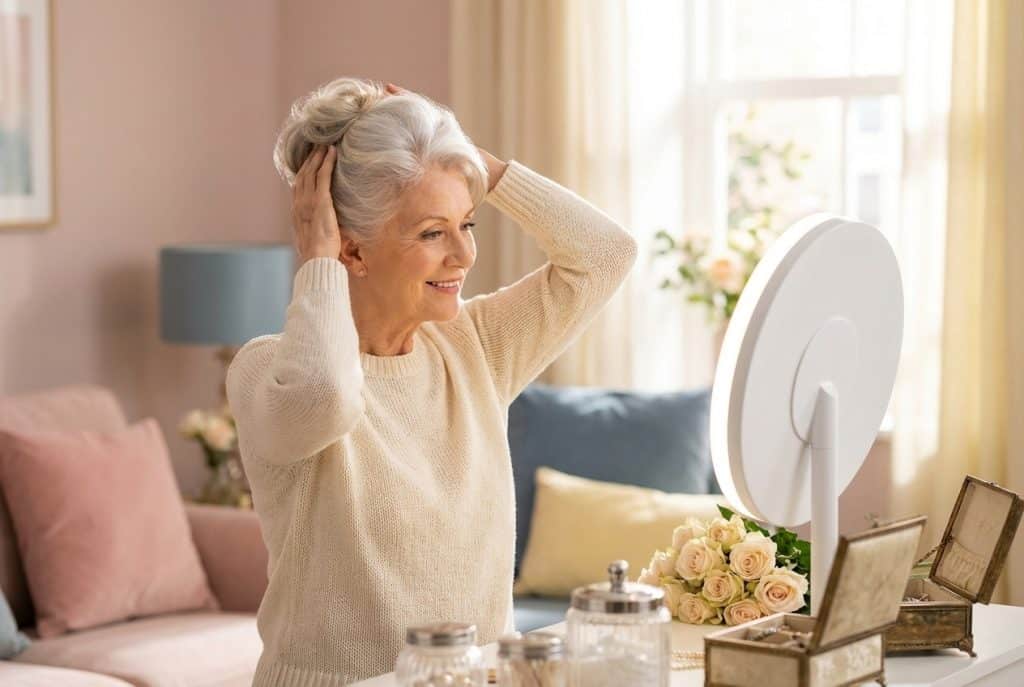
There is something deeply personal about the way we present ourselves to the world. How we look on the outside has a genuine influence on how we feel on the inside, and choosing to care for your appearance is not vanity.
It is an act of self-respect and a quiet affirmation that this chapter of life is worth showing up for fully. Addressing personal beauty needs directly supports aging confidently.
For many women, one of the more emotionally tender changes that comes with aging is a shift in their hair.
Thinning at the crown, reduced volume, or changes in texture can feel like a slow erasure of something tied closely to identity. If that resonates with you or with someone you love, it is worth knowing that acknowledging it is not a weakness.
There are genuinely beautiful solutions for thinning hair available today. Women who notice thinning concentrated at the top of the scalp or along the part line are often ideal candidates for localized volume enhancements.
These partial pieces blend seamlessly with existing hair to restore volume, coverage, and natural movement right where it is needed most.
When crafted with care and precision, a well-fitted piece is virtually undetectable while behaving just like one’s own hair.
While some may experiment with temporary volumizing powders, those curating a more permanent, high-end silhouette often invest in the craftsmanship of Daniel Alain hair toppers to achieve that effortless, polished look.
Premium pieces constructed from European human hair are chosen specifically for their authentic texture and movement.
The result is not a cosmetic mask, but a restoration of the feeling of stepping out and looking entirely unmistakably like yourself.
A personalized, compassionate consultation process meets women exactly where they are without judgment or rush. Sometimes, confidence is rebuilt one small, beautiful detail at a time because a great hair day helps you feel at home in yourself again.
3. Routines That Reduce Stress
There is a particular kind of stress that does not announce itself loudly. It settles in gradually through disrupted sleep, a mind that cannot quiet itself at night, or a low-grade tension that becomes entirely too familiar.
For older adults and the family members caring for them, this kind of chronic background stress is remarkably common and deserves serious attention.
In fact, reports show that about 25% of adults aged 65 years or older experience mental health challenges not associated with normal aging.
Building small, consistent daily rituals is one of the most underrated everyday confidence tips available. These habits do not require dramatic lifestyle overhauls or massive shifts in your schedule.
They simply ask for a few minutes of intentional care each day to slowly shift the emotional baseline in meaningful ways. Establishing these patterns is critical, especially since anxiety symptoms affect over 11% of older adults.
A few gentle practices are highly worth considering for a balanced routine.
- Gentle morning movement: Even ten minutes of light stretching or slow walking can ease the body into the day with more grace.
- A gratitude or journaling practice: Writing down two or three small things that went well trains the brain to notice the positive.
- Daily time outdoors: Even a brief walk in natural light has been shown to reduce cortisol levels and improve mood.
- Mindful breathing before sleep: A short breathing ritual before bed activates the body’s parasympathetic nervous system for a restful transition.
For those who would like an effortless additional layer of calm woven into their day, passive wellness options are incredibly helpful.
Certain wearable devices apply gentle vibrations behind the ears to activate the brain’s natural stress regulation response. They are designed for individuals who want relief that works quietly without effort or constant interruption.
You can easily consider these tools as one more option on a menu of good, science-backed choices.
| Key Insight: Confidence is not a one-time achievement; it is the cumulative result of small daily wins. Consistently practicing minor rituals like deep breathing builds a resilient emotional foundation for navigating the transitions of aging. |
4. Ways Family Can Stay Connected
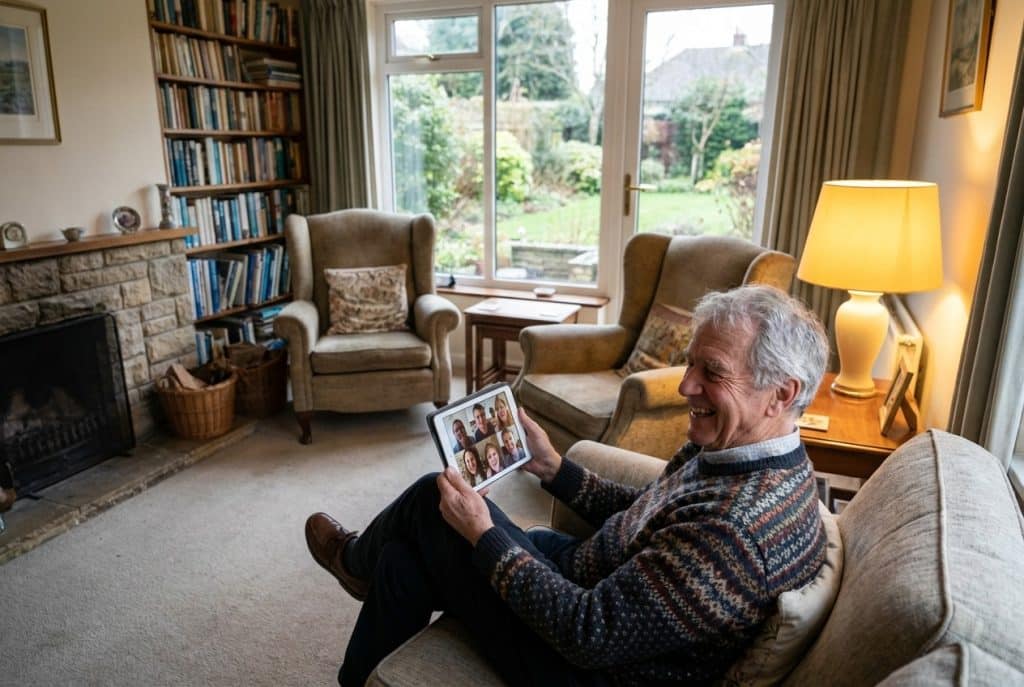
Of all the things that quietly sustain confidence in later life, knowing you are loved, remembered, and not alone remains incredibly powerful. Social connection is not a soft or secondary concern when it comes to overall well-being.
Loneliness and social isolation are strongly associated with higher rates of cognitive decline and reduced vitality in older adults. Sadly, data indicate that roughly 12% of seniors rarely or never receive the social support they truly need.
Meaningful connection acts as a powerful buffer against these challenges, making it one of the most accessible tools we have.
The good news is that staying genuinely connected does not require grand gestures or long-distance travel. It is built through small, consistent moments of closeness that fit naturally into a weekly schedule.
Families can implement several practical habits to maintain strong bonds.
- Scheduled video calls: Building in a regular check in gives a senior something warm and highly predictable to look forward to.
- Shared digital hobbies: Photo sharing apps, online word games, or virtual book clubs create genuine common ground across distances.
- Memory sharing traditions: Inviting a loved one to share a favorite recipe or childhood story validates a life well lived.
- In-person rituals: Simple recurring events like a monthly lunch or shared walk create an irreplaceable sense of belonging.
These intentional habits also deliver something equally meaningful for the broader family unit.
They provide genuine peace of mind for families who want to stay attuned to how their loved ones are truly doing.
Going beyond a quick text or a surface level update fosters a much deeper understanding of their daily reality. Connection is clearly not a luxury, but rather a daily confidence builder for everyone involved.
Aging Well Comes From Small Daily Choices
Aging confidently is rarely the result of a single overarching decision or massive lifestyle overhaul. It is assembled slowly, with profound care, across multiple interconnected areas of daily life.
This includes utilizing safety tools that offer freedom without restriction and finding a beauty solution that restores the feeling of being fully yourself.
It also involves engaging in calming rituals that quiet the noise and maintaining family connections that remind you that you truly matter. None of these individual steps needs to be dramatic or overwhelming to execute.
In fact, the quieter and more consistent they are, the more sustainably they work over the long term. They gradually accumulate over weeks and months into something that feels highly restorative.
This steady process feels less like aging gracefully and far more like simply living well. You might be the one navigating these specific life changes firsthand.
Alternatively, you might be the one walking lovingly beside a parent or partner who is currently transitioning. Regardless of your specific role, every small step toward safety, beauty, calm, and connection is a massive victory.
These choices ultimately pave a clear path toward a significantly more confident and fulfilled chapter of life.